
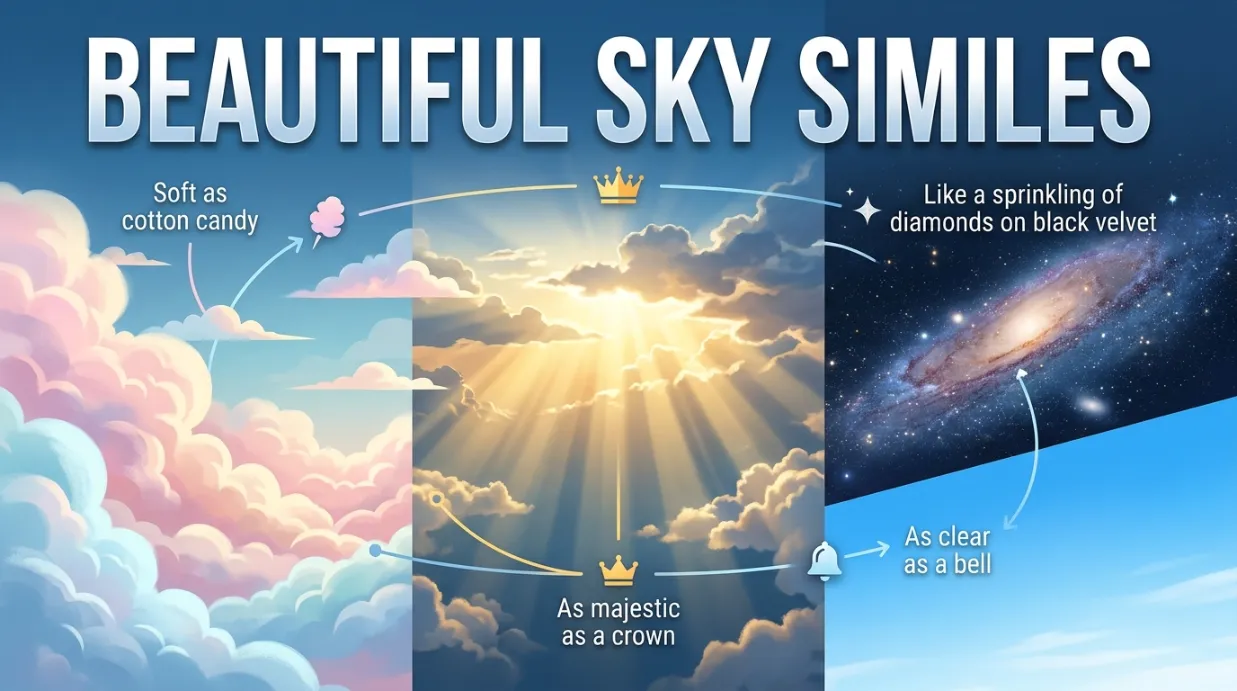
The sky is one of nature’s most beautiful sights, offering endless inspiration for writers, poets, and storytellers. From peaceful blue mornings to colorful sunsets and starry nights, every sky creates a unique picture. Using beautiful sky similes helps you describe these scenes with creative comparisons that make your writing more vivid and engaging.
A simple description like “the sky was beautiful” tells readers what you see, but a creative comparison brings that beauty to life. For example, you could describe the sky as “like a giant watercolor painting stretched across the horizon.” This makes the scene easier to imagine and adds an artistic touch to your words.
Whether you are writing poems, stories, essays, or social media captions, the right simile can make your descriptions more memorable. Explore these creative examples to discover fresh ways to describe the sky and express its beauty through words.
What Are Beautiful Sky Similes?
Beautiful sky similes are creative comparisons that describe the sky by connecting its appearance, colors, or atmosphere to familiar things. They use words such as “like” or “as” to help readers imagine a scene more clearly.
For example:
“The sky was like a giant canvas painted with shades of blue.”
This comparison helps readers picture the beauty of a clear blue sky. Instead of simply describing its color, it creates an artistic image that makes the sentence more interesting.
Here are a few more examples:
- The sky was like a peaceful ocean stretching beyond the horizon.
- The clouds were like fluffy pillows floating through the air.
- The sunset was like a golden painting created by nature.
Each comparison creates a different image and feeling.
The best sky similes combine familiar images with creative descriptions. They make ordinary observations more expressive and help readers connect with the scene.
Why Use Beautiful Sky Similes in Writing?
Using beautiful sky similes makes descriptions more colorful, expressive, and memorable. They help writers communicate emotions, create mental pictures, and turn everyday observations into interesting scenes.
Here are some important benefits.
They Create Vivid Visual Images
A creative simile helps readers picture the sky without needing a lengthy explanation. Comparing clouds to floating pillows or the sunset to a golden river creates an image that feels familiar and easy to understand.
For example:
“The clouds were like soft cotton balls scattered across a bright blue canvas.”
This comparison makes the scene more vivid and gives readers a clear picture of the sky.
They Express Different Emotions
The sky can reflect many human emotions, including happiness, peace, sadness, love, and mystery. Similes help writers connect natural scenes with these feelings.
For example:
“The evening sky was like a farewell letter written in shades of orange and pink.”
This comparison creates a gentle feeling of nostalgia and makes the description more emotional.
They Improve Creative Writing
Writers use similes to make poems, stories, essays, and other creative content more engaging. A fresh comparison can turn an ordinary sentence into an imaginative description.
For example:
“The stars were like tiny lanterns lighting the pathways of dreams.”
This sounds more creative than simply saying that the stars were bright.
They Make Descriptions Memorable
Readers are more likely to remember descriptions that create interesting mental pictures. A unique comparison gives ordinary scenes a special quality.
For example:
“The sunset was like a golden river flowing toward the edge of the world.”
The combination of color and movement makes this description more memorable.
They Suit Different Writing Styles
Sky similes work in many types of writing because they can be simple, emotional, humorous, or imaginative.
- Poetry: Add beautiful imagery and emotional depth.
- Stories: Create detailed scenes and establish atmosphere.
- Captions: Make short descriptions more attractive.
- Essays: Explain observations through creative comparisons.
- Children’s writing: Make descriptions playful and easy to understand.
How to Choose the Best Sky Simile
Choosing the right sky simile depends on what you want to describe and the feeling you want to create. A peaceful morning calls for a different comparison than a dramatic sunset or a dark, cloudy evening.
Keep these points in mind when selecting a simile.
Consider the Sky’s Appearance
First, observe the sky’s colors, shapes, and patterns. Notice whether it is bright, cloudy, colorful, or dark.
For example, a clear blue sky might remind you of a calm ocean, while a colorful sunset could look like a painting filled with warm shades.
Match the Simile to the Mood
Think about the emotion you want readers to experience.
- Peaceful: The sky was like a gentle blue melody floating above the earth.
- Powerful: The storm clouds were like mighty mountains moving across the horizon.
- Magical: The night sky was like a treasure chest filled with sparkling jewels.
- Romantic: The sunset was like a love letter written in golden light.
Matching the comparison to the mood makes your writing feel more natural.
Keep Your Audience in Mind
Choose comparisons that your readers can easily understand and enjoy. Children may prefer playful images, while poetry readers may appreciate more emotional descriptions.
For children:
“The clouds were like fluffy cotton balls dancing in the sky.”
For poetry:
“The clouds were like forgotten dreams drifting across a silver ocean.”
Avoid Forced Comparisons
A good simile should create a natural connection between two things. Avoid comparisons that feel unrelated or make the description difficult to understand.
Weak example:
“The sky was like a complicated machine.”
Better example:
“The sky was like a giant canvas waiting for the colors of dawn.”
The second comparison creates a clearer image and connects naturally with the beauty of the sky.
Beautiful Sky Similes for Different Moods and Styles
The sky offers endless inspiration for creative comparisons. Whether you want to describe a cheerful morning, an emotional sunset, or a mysterious night, the right simile can bring your words to life.
Explore these beautiful sky similes and find the perfect expressions for your poems, stories, captions, and other creative writing projects.
Positive Beautiful Sky Similes
Positive sky similes express happiness, hope, warmth, and natural beauty. They are perfect for describing bright mornings, colorful sunsets, and uplifting moments.
1. The sky was like a bright smile spreading across the earth.
This comparison connects a beautiful sky with happiness and positivity. It works well for describing a bright, sunny day.
2. The sky was like a golden welcome from nature.
This simile creates a warm and inviting image, making it suitable for beautiful sunrise descriptions.
3. The sky was like a fresh canvas filled with endless possibilities.
This comparison represents creativity, hope, and new beginnings.
4. The sky was like a crystal window opening into a peaceful world.
It highlights the clarity and beauty of a clear sky.
5. The sky was like a cheerful song painted with colors.
This creative comparison combines visual beauty with musical imagery.
6. The sky was like a blue garden blooming above the earth.
It creates a refreshing image of a bright and beautiful sky.
7. The sky was like a glowing treasure spread across the horizon.
This simile emphasizes the sky’s brilliant colors and natural beauty.
8. The sky was like a magical doorway opening toward dreams.
It creates a hopeful atmosphere filled with imagination and possibilities.
9. The sky was like a soft blanket of happiness covering the world.
This comparison gives the sky a comforting and positive feeling.
10. The sky was like a peaceful river flowing above the earth.
It creates an image of calmness, beauty, and gentle movement.
Emotional Beautiful Sky Similes
Emotional sky similes connect natural beauty with human feelings, memories, dreams, and relationships. They are especially useful for poetry, heartfelt stories, and reflective writing.
1. The sky was like a silent friend listening to the world.
This comparison gives the sky a comforting personality and represents peaceful companionship.
2. The evening sky was like a farewell letter written in colors.
It creates a nostalgic feeling and reflects the beauty of saying goodbye to the day.
3. The clouds were like soft memories floating through time.
This simile connects moving clouds with memories that gently pass through our minds.
4. The sky was like a heart filled with unspoken feelings.
It works well for emotional descriptions when words cannot express everything.
5. The sunset was like a final goodbye whispered by the day.
This comparison creates a touching image of daylight slowly disappearing.
6. The sky was like a dream waiting to be remembered.
It gives the sky a mysterious and thoughtful quality.
7. The stars were like tiny hopes shining through the darkness.
This simile represents optimism and encouragement during difficult times.
8. The morning sky was like a promise of better days.
It connects sunrise with hope, confidence, and fresh beginnings.
9. The clouds were like wandering thoughts crossing the mind.
This comparison connects the movement of clouds with changing emotions.
10. The sky was like a diary filled with nature’s secrets.
It creates a personal and mysterious image of the natural world.
Funny Beautiful Sky Similes
Funny sky similes bring humor and personality to ordinary descriptions. They are great for entertaining captions, children’s stories, and playful creative writing.
1. The clouds were like lazy pillows refusing to move.
This creates a humorous image of clouds resting in the sky.
2. The sky was like a giant screen showing nature’s favorite movie.
It makes the sky feel like an entertaining outdoor display.
3. The clouds were like cotton balls thrown by a playful giant.
This comparison creates a funny and imaginative picture.
4. The sky was like a giant bowl of blue soup without a spoon.
It adds a silly touch to a simple blue sky description.
5. The sunset was like the sky trying on a fancy outfit.
This gives the colorful evening sky a playful personality.
6. The clouds were like confused animals searching for directions.
It creates a humorous picture of unusual cloud shapes.
7. The sky was like a painter who accidentally spilled every color.
This works well when describing a colorful and dramatic sunset.
8. The stars were like tiny lights someone forgot to switch off.
It creates a simple and amusing nighttime comparison.
9. The clouds were like fluffy monsters having a secret meeting.
This adds a playful fantasy element to the description.
10. The sky was like a giant balloon floating over the neighborhood.
It creates a cheerful and funny image.
Creative Beautiful Sky Similes
Creative sky similes use imaginative comparisons to make descriptions more original. They are especially useful for poetry, fiction, storytelling, and artistic writing.
1. The sky was like an endless ocean turned upside down.
This comparison transforms the sky into a beautiful reflection of the sea.
2. The clouds were like floating islands in a blue universe.
It creates a magical image of clouds drifting through an endless sky.
3. The sunrise was like a golden brush painting the edge of the world.
This connects the morning sky with the work of an artist.
4. The sky was like a giant book written in colors.
It suggests that every changing sky tells a different story.
5. The stars were like scattered diamonds on a velvet curtain.
This creates an elegant and sparkling image of the night sky.
6. The sky was like a magical theater where nature performed every day.
It gives the sky a dramatic and imaginative personality.
7. The clouds were like wandering ships sailing across a blue sea.
This comparison adds movement and adventure to the description.
8. The sunset was like melted gold flowing across the horizon.
It emphasizes the warmth and richness of sunset colors.
9. The sky was like a hidden treasure map drawn by nature.
This creates a feeling of mystery and discovery.
10. The moon was like a silver lantern hanging in the night.
It creates a peaceful and beautiful nighttime image.
Powerful Beautiful Sky Similes
Powerful sky similes create strong images of energy, movement, and drama. They are useful for describing thunderstorms, intense sunsets, and unforgettable natural scenes.
1. The storm clouds were like armies marching across the sky.
This comparison creates a powerful image of movement and force.
2. The sky was like a giant battlefield filled with thunder and lightning.
It creates a dramatic atmosphere during a storm.
3. The lightning was like a sword cutting through the darkness.
This highlights the sudden brightness and intensity of lightning.
4. The clouds were like mountains rising above the world.
It emphasizes their size and impressive appearance.
5. The sunset was like a burning crown placed on the horizon.
This creates a bold and majestic image.
6. The sky was like a roaring ocean filled with endless energy.
This comparison gives the sky movement and intensity.
7. The thunder was like a giant drum shaking the earth.
It creates a strong sensory image of a powerful storm.
8. The clouds were like powerful waves crashing across the heavens.
This connects storm clouds with the energy of the ocean.
9. The sky was like a giant canvas painted with fire.
This simile works especially well for dramatic sunsets.
10. The lightning was like a flash of ancient magic across the clouds.
It creates a mysterious and fantasy-inspired image.
Modern Beautiful Sky Similes
Modern sky similes use technology, entertainment, and everyday digital experiences to create relatable comparisons. They work well for social media captions, blogs, and casual writing.
1. The sky was like a giant screen displaying nature’s artwork.
This comparison connects the sky with modern entertainment.
2. The sunset was like a perfect photo filter created by nature.
This works well for social media captions and digital content.
3. The stars were like thousands of tiny notifications lighting up the night.
It creates a modern and relatable image.
4. The sky was like a limitless digital painting.
This connects technology with artistic creativity.
5. The clouds were like soft animations moving across a natural screen.
This creates a modern visual comparison.
6. The rainbow was like nature’s colorful display update.
It gives a playful, technology-inspired feeling.
7. The sky was like a high-resolution picture that never needed editing.
This highlights the natural beauty of the sky.
8. The stars were like glowing pixels scattered across darkness.
It creates a modern nighttime image.
9. The sunset was like a trending masterpiece everyone wanted to capture.
This comparison fits social media writing.
10. The clouds were like moving artwork on nature’s biggest screen.
It creates an impressive visual image.
How to Use Sky Similes in Writing
Using beautiful sky similes effectively means placing them where they feel natural. A comparison should support your message rather than distract readers from the main idea.
A strong sky simile can help you:
- Create a clear mental picture.
- Add emotion to a scene.
- Make descriptions more memorable.
- Help readers imagine a particular moment.
The key is to choose a comparison that matches the mood and purpose of your writing.
Use Similes in Descriptive Writing
When describing nature, use sky similes to help readers visualize the surroundings.
Basic description:
The sunset was beautiful.
Improved description:
The sunset was like a golden river flowing across the edge of the world.
The second example gives readers a stronger image through color, movement, and beauty.
Use Similes in Poetry
Poetry often uses imagination and emotion to communicate ideas. Beautiful sky similes can turn simple observations into expressive images.
For example:
The stars were like tiny wishes scattered across the midnight sky.
This comparison creates a dreamy feeling that fits poetic writing.
Use Similes in Stories
In storytelling, sky similes can establish the setting and create a particular atmosphere.
For example:
The storm clouds were like dark curtains closing over the village.
This description creates tension and prepares readers for a dramatic event.
Avoid Overusing Similes
Too many comparisons can make writing feel crowded. Choose the strongest image and allow it to stand out.
Weak approach:
The sky was like a painting, like a mirror, like a river, and like a dream.
Better approach:
The sky was like a living painting changing colors with every passing moment.
One memorable comparison is often more effective than several average ones.
Common Mistakes to Avoid
Writing effective beautiful sky similes requires creativity and balance. Avoiding a few common mistakes can make your comparisons clearer and more engaging.
Using Overused Comparisons
Some comparisons are used so frequently that they lose their impact. Familiar expressions can still work, but adding a fresh detail makes them more interesting.
Basic:
The sky was like a painting.
Improved:
The sky was like a watercolor painting where every cloud carried a new shade of emotion.
The second version feels more specific and imaginative.
Choosing Unrelated Comparisons
A simile should create a logical connection between two things. Random comparisons can confuse readers.
Weak example:
The sky was like a noisy computer keyboard.
Better example:
The sky was like a glowing screen displaying nature’s artwork.
The improved example creates a more recognizable connection.
Making Similes Too Complicated
Creative writing does not require complicated vocabulary. Simple language often creates the strongest images.
Too complicated:
The sky was like an extraordinary atmospheric phenomenon filled with celestial visual arrangements.
Better:
The sky was like a magical painting filled with endless colors.
Ignoring the Mood
The comparison should match the emotion of the scene.
For a romantic scene:
The sky was like a soft love letter written by nature.
For a dramatic scene:
The sky was like a powerful ocean of storm clouds.
Choosing the right mood helps your writing feel natural.
Repeating Similar Ideas
Using several similes with nearly identical meanings reduces variety.
Examples that feel too similar:
- The sky was like a painting.
Instead, explore different images:
- The sky was like a flowing river.
Forgetting the Purpose
Every simile should serve a purpose. Ask yourself whether the comparison creates a stronger image or feeling.
If it does not improve the description, choose a more meaningful comparison.
Tips for Creating Original Sky Similes
Creating original beautiful sky similes becomes easier when you practice observation and imagination. These tips can help you develop comparisons that make your writing more distinctive.
Observe Real Details
Before writing, pay attention to the sky’s actual appearance.
Look for:
- Color changes throughout the day.
- Different cloud shapes and patterns.
- Sunlight and shadow.
- Weather conditions.
- Changes between morning, afternoon, and evening.
Detailed observations can inspire more meaningful comparisons.
Instead of writing:
The sky was like something beautiful.
Try:
The evening sky was like melted peach-colored glass glowing above the rooftops.
Combine Different Senses
Strong similes can combine visual details with sounds, feelings, and movement.
For example:
The morning sky was like a gentle song painted in shades of blue.
This comparison combines visual and musical imagery.
Use Unexpected Comparisons
Original images can help your writing stand out. Look beyond familiar comparisons and explore unusual connections.
Common:
The stars were like diamonds.
Creative:
The stars were like tiny lanterns left behind by wandering dreams.
The second comparison creates a fresher and more imaginative image.
Match the Comparison to Your Message
Think about what you want readers to feel before choosing a simile.
For happiness:
The sky was like a cheerful celebration of colors.
For mystery:
The sky was like a hidden doorway to another world.
For calmness:
The sky was like a quiet lake floating above the earth.
Keep Your Audience in Mind
Different readers enjoy different styles of comparison.
Children may enjoy:
The clouds were like fluffy animals playing above the trees.
Adult readers may prefer:
The clouds were like forgotten memories drifting through time.
Choose words that suit your audience and writing purpose.
Practice Creating Your Own
Start with a simple observation and ask yourself what it reminds you of.
For example:
Observation: The sky is orange at sunset.
Possible comparisons:
- A glowing lamp.
- A river of gold.
Turn one idea into a simile:
The sunset was like a river of gold flowing across the horizon.
With practice, you can create original comparisons for almost any type of sky.
Best Sky Similes for Different Writing Situations
Different writing situations require different types of beautiful sky similes. The best comparison depends on your purpose, audience, and the emotion you want to create.
| Writing Situation | Best Simile Style | Example Simile |
| Poetry | Emotional and imaginative | The sky was like a dream painted with endless colors. |
| Romantic writing | Soft and meaningful | The sunset was like a love letter written by nature. |
| Children’s stories | Simple and playful | The clouds were like fluffy toys floating above. |
| Fantasy stories | Magical and mysterious | The stars were like enchanted lights guarding the night. |
| Travel writing | Detailed and visual | The sky was like a giant painting above the mountains. |
| Social media captions | Short and catchy | The sky was like nature’s masterpiece. |
| School assignments | Clear and descriptive | The sky was like a blue blanket covering the world. |
| Nature blogs | Fresh and descriptive | The sunrise was like a golden brush painting the horizon. |
| Emotional essays | Reflective and meaningful | The cloudy sky was like a quiet heart hiding its feelings. |
| Fiction scenes | Atmospheric and detailed | The storm clouds were like dark waves rising across the sky. |
Final Thoughts
Using the right beautiful sky similes can make your writing more vivid, creative, and engaging. Whether you are describing a colorful sunrise, fluffy clouds, a glowing sunset, or a star-filled night, the right comparison helps readers imagine the scene and connect with its beauty. Simple yet meaningful similes can add emotion and personality to poems, stories, essays, and social media captions.
The best sky similes come from creativity and careful observation. Look at the changing colors, moving clouds, and shining stars for fresh inspiration. Experiment with different comparisons to find words that match your message and writing style. Remember, a great simile does more than describe the sky; it helps readers picture its beauty, feel its atmosphere, and enjoy your words.
FAQS
What makes a beautiful sky simile effective?
A beautiful sky simile is effective when it creates a clear mental image and matches the mood of the writing. Strong comparisons feel natural, specific, and easy to understand. For example, comparing clouds to floating islands creates a more imaginative picture than simply saying the clouds are beautiful.
Can I use beautiful sky similes in everyday writing?
Yes, beautiful sky similes can improve everyday writing, including social media captions, journal entries, personal reflections, and creative messages. A simple comparison can make ordinary moments feel special. For example, describing a sunset as a golden curtain adds warmth and creativity to a casual description.
How do I create my own sky similes?
To create your own sky similes, observe the sky carefully and think about what its colors, shapes, and movements remind you of. Consider familiar objects, emotions, and experiences that match the scene. For example, a cloudy afternoon might inspire a comparison to a soft gray blanket or a quiet dream.
Are sky similes useful for poetry?
Yes, sky similes are especially useful for poetry because they add emotion, rhythm, and imagination. Poets often compare natural scenes with human feelings to create deeper meanings. For example, describing stars as tiny wishes connects a simple night scene with ideas of hope and dreams.
What is the difference between a sky simile and a sky metaphor?
A sky simile uses comparison words such as “like” or “as” to connect two different things. A metaphor directly describes one thing as another. For example, “The sky was like a painting” is a simile, while “The sky was a painting” is a metaphor.
Should sky similes always describe beauty?
No, sky similes can describe many different moods and emotions. They can express happiness, sadness, mystery, excitement, or power. For example, a stormy sky might be compared to a battlefield, while a calm evening sky could be compared to a peaceful song.
How many sky similes should I use in one piece of writing?
The ideal number depends on the length and purpose of your writing. Using too many comparisons can make your work feel crowded and repetitive. Choose a few strong similes that support your message and give each description enough space to make an impact.
Can children use beautiful sky similes?
Yes, children can use beautiful sky similes to develop creativity and improve their descriptive writing skills. Simple comparisons help young writers explain what they see. For example, “The clouds were like fluffy cotton balls” is an easy and effective simile for a school assignment or children’s story.
How can I avoid boring sky similes?
Avoid boring sky similes by adding unique details and observing the world carefully. Instead of relying on common comparisons, look for fresh connections. For example, rather than describing stars as diamonds, you could compare them to tiny lanterns guiding travelers through a midnight journey.
Where can I use beautiful sky similes besides creative writing?
Beautiful sky similes can be used in social media posts, speeches, presentations, greeting cards, school assignments, and marketing content. They help create emotional connections and make messages more memorable. A thoughtful sky comparison can add personality to almost any type of communication.

Daniel Carter is a passionate English writer dedicated to making language learning simple, practical, and engaging. At Grammar Alpha, he shares clear and reliable insights on grammar, vocabulary, word meanings, sentence structure, and everyday English usage. His easy-to-follow articles help students, professionals, and language learners strengthen their writing and communication skills. With a strong focus on clarity and accuracy, Daniel turns complex English concepts into useful lessons, empowering readers to write with confidence, speak naturally, and use English effectively every day.
1 thought on “90+ Beautiful Sky Similes to Brighten Your Writing With Creative Examples”