
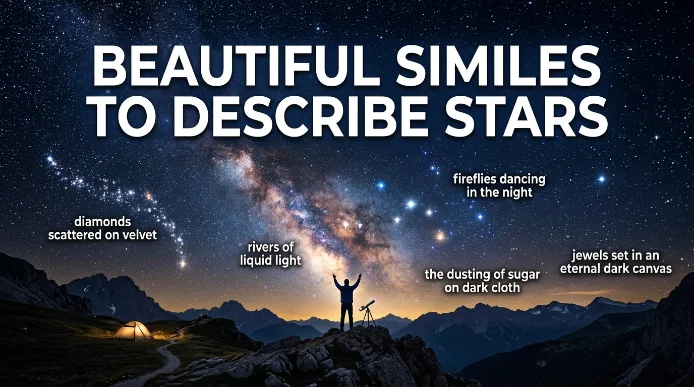
The night sky has inspired storytellers, poets, and dreamers for centuries. Using beautiful similes to describe stars helps transform ordinary writing into vivid, memorable scenes that capture wonder, mystery, and emotion. A well-crafted simile allows readers to picture sparkling constellations, glowing galaxies, and peaceful evenings in a fresh way.
In this guide, you’ll discover a large collection of original similes for stars, organized into easy-to-browse categories. You’ll also learn when to use each comparison, how to choose the right one for different situations, and practical tips for making your descriptions sound natural instead of forced. Whether you’re writing poetry, fiction, essays, captions, or speeches, these similes will help your words shine.
What Are Beautiful Similes to Describe Stars?
Beautiful similes to describe stars are comparisons that use the words “like” or “as” to explain how stars look, feel, or behave. Instead of simply saying that stars are bright, a simile paints a picture by comparing them to something familiar.
For example:
- The stars shimmered like tiny lanterns in the sky.
- The stars were as delicate as scattered pearls.
- The stars sparkled like drops of crystal.
These comparisons help readers imagine the scene more clearly. They also create emotion, making a description feel peaceful, magical, romantic, or mysterious depending on the image you choose.
Here’s why.
The best similes do more than describe brightness. They can suggest hope, dreams, silence, distance, beauty, or even adventure. A single creative comparison can completely change the mood of your writing.
Some similes focus on appearance.
Others describe movement, emotion, or atmosphere.
Together, they make writing far more engaging than plain descriptions.
Why These Similes Matter
Using beautiful similes to describe stars makes your writing more vivid because readers naturally connect with familiar images. Instead of asking people to imagine an abstract idea, you give them something they already understand.
For example, saying “the stars glittered like polished diamonds” instantly creates a sparkling image. Saying “the stars floated like tiny boats on a dark sea” creates a calm, dreamy feeling.
Now consider this.
Different situations call for different kinds of comparisons.
A romance story may benefit from gentle, glowing similes.
A fantasy novel might need magical comparisons.
A children’s story often works best with playful and imaginative images.
Strong similes also help you:
- Capture emotion without long explanations.
- Create memorable scenes readers remember.
- Improve storytelling with colorful language.
- Add rhythm to poems and speeches.
- Make essays and creative assignments more engaging.
- Avoid repetitive descriptions like “bright stars” or “beautiful sky.”
Whether you’re writing fiction or nonfiction, choosing the right simile makes your message clearer and more enjoyable.
How to Choose the Right Simile
Not every simile fits every situation. The best comparison depends on your audience, your writing style, and the feeling you want to create.
Before choosing a simile, ask yourself these questions:
- What emotion should readers feel?
- Is the scene peaceful, exciting, romantic, or mysterious?
- Will the comparison be easy for readers to understand?
- Does it sound fresh instead of overused?
Here’s a simple guide.
| Writing Goal | Best Type of Simile | Example |
| Create wonder | Nature inspired | Like flowers blooming across the night sky |
| Add elegance | Jewel comparisons | Like scattered sapphires on velvet |
| Show peace | Soft imagery | Like floating feathers in darkness |
| Build romance | Gentle glowing images | Like candles lit for two hearts |
| Inspire imagination | Fantasy comparisons | Like tiny gateways to another universe |
| Write poetry | Artistic comparisons | Like whispers woven into the heavens |
| Describe adventure | Explorer imagery | Like guiding lanterns across an endless sea |
| Create mystery | Dreamlike comparisons | Like hidden eyes watching the world |
Choosing carefully helps every comparison feel meaningful instead of random.
Best Beautiful Similes to Describe Stars
Below are carefully organized collections of original star similes. Each one includes a brief explanation to help you understand when it works best.
Beautiful and Classic Similes for Stars
These timeless comparisons fit almost any type of writing, from school essays to novels.
1. Like scattered diamonds across black velvet
Shows brilliant sparkles against a dark sky.
Example: The stars glittered like scattered diamonds across black velvet.
2. Like tiny lanterns hanging in heaven
Creates a warm, comforting image.
Example: Above the village, the stars glowed like tiny lanterns hanging in heaven.
3. Like pearls spilled across silk
Suggests elegance and softness.
Example: The stars rested like pearls spilled across silk.
4. Like silver seeds planted in the night
Represents hope and new beginnings.
Example: The stars appeared like silver seeds planted in the night.
5. Like crystal droplets frozen in darkness
Highlights clarity and sparkle.
Example: Each star shimmered like crystal droplets frozen in darkness.
6. Like tiny candles glowing forever
Suggests warmth and endurance.
Example: The stars burned like tiny candles glowing forever.
7. Like polished gems sewn into the sky
Creates a luxurious visual image.
Example: The stars looked like polished gems sewn into the sky.
8. Like golden sparks from a giant fire
Perfect for energetic nighttime scenes.
Example: Bright stars scattered like golden sparks from a giant fire.
9. Like bright buttons stitched onto midnight fabric
Adds a playful but elegant comparison.
Example: The stars shone like bright buttons stitched onto midnight fabric.
10. Like shimmering beads on velvet cloth
Ideal for peaceful descriptions.
Example: The stars rested like shimmering beads on velvet cloth.
11. Like tiny mirrors catching invisible light
Suggests mystery and reflection.
Example: Every star glittered like tiny mirrors catching invisible light.
12. Like glowing blossoms opening after sunset
Combines floral beauty with nighttime imagery.
Example: The stars bloomed like glowing blossoms opening after sunset.
13. Like drops of silver paint across a canvas
Excellent for artistic writing.
Example: Stars spread like drops of silver paint across a canvas.
14. Like distant lighthouse beams
Suggests guidance and hope.
Example: The stars shone like distant lighthouse beams for travelers.
15. Like frozen raindrops catching moonlight
Creates a calm and delicate image.
Example: Above us, stars sparkled like frozen raindrops catching moonlight.
Best Beautiful Similes to Describe Stars
Creative Similes for Stars
These creative similes to describe stars use unexpected comparisons that make your writing feel fresh and original.
1. Like puzzle pieces completing the sky
Suggests every star has a purpose.
Example: Stars rested like puzzle pieces completing the sky.
2. Like glowing fingerprints left by the universe
Unique and imaginative.
Example: The stars looked like glowing fingerprints left by the universe.
3. Like tiny windows into another world
Perfect for fantasy and science fiction.
Example: The stars shone like tiny windows into another world.
4. Like scattered notes from a cosmic melody
Combines music and astronomy.
Example: Stars sparkled like scattered notes from a cosmic melody.
5. Like bright breadcrumbs leading to dreams
Represents guidance and imagination.
Example: The stars stretched like bright breadcrumbs leading to dreams.
6. Like invisible flowers blooming in space
Fresh and artistic.
Example: Stars appeared like invisible flowers blooming in space.
7. Like glowing stitches repairing the night
Suggests the sky is beautifully mended.
Example: The stars shone like glowing stitches repairing the night.
8. Like tiny storytellers waiting to be heard
Excellent for creative writing.
Example: The stars sparkled like tiny storytellers waiting to be heard.
9. Like scattered puzzle lights across infinity
Creates a mysterious feeling.
Example: Stars glittered like scattered puzzle lights across infinity.
10. Like floating lanterns guiding forgotten dreams
Suggests hope and imagination.
Example: The stars drifted like floating lanterns guiding forgotten dreams.
11. Like tiny clocks measuring eternity
Represents endless time.
Example: Stars rested like tiny clocks measuring eternity.
12. Like sparkling footprints across the universe
Creates movement and adventure.
Example: The stars stretched like sparkling footprints across the universe.
13. Like silver feathers caught in space
Light and graceful.
Example: Stars floated like silver feathers caught in space.
14. Like bright bookmarks inside the night
A fun comparison for readers.
Example: The stars looked like bright bookmarks inside the night.
15. Like glowing puzzle stars waiting to connect
Suggests mystery and discovery.
Example: The stars glittered like glowing puzzle stars waiting to connect.
Magical Similes for Stars
These magical similes for stars are perfect for fantasy stories, fairy tales, and imaginative writing.
1. Like fairy lanterns lighting enchanted paths
Creates an enchanting atmosphere.
Example: The stars glowed like fairy lanterns lighting enchanted paths.
2. Like tiny spells frozen in the sky
Suggests hidden magic.
Example: Stars sparkled like tiny spells frozen in the sky.
3. Like wizard jewels guarding the night
Adds fantasy adventure.
Example: The stars rested like wizard jewels guarding the night.
4. Like dragon scales catching moonlight
Bold and imaginative.
Example: Stars shimmered like dragon scales catching moonlight.
5. Like enchanted pearls floating forever
Elegant and magical.
Example: The stars looked like enchanted pearls floating forever.
6. Like fairy dust sprinkled across darkness
A classic magical image.
Example: Stars sparkled like fairy dust sprinkled across darkness.
7. Like glowing charms protecting travelers
Represents safety and guidance.
Example: The stars shone like glowing charms protecting travelers.
8. Like hidden treasure waiting above
Suggests mystery and wonder.
Example: Stars glittered like hidden treasure waiting above.
9. Like magical butterflies resting in space
Soft and whimsical.
Example: The stars floated like magical butterflies resting in space.
10. Like crystals blessed by moonlight
Creates a peaceful fantasy image.
Example: The stars glimmered like crystals blessed by moonlight.
11. Like glowing keys to secret kingdoms
Perfect for fantasy adventures.
Example: Stars hung like glowing keys to secret kingdoms.
12. Like wishes granted before sunrise
Represents hope and miracles.
Example: The stars sparkled like wishes granted before sunrise.
13. Like celestial fireflies dancing forever
Lively and magical.
Example: Stars twinkled like celestial fireflies dancing forever.
14. Like ancient magic trapped inside light
Creates mystery.
Example: The stars shined like ancient magic trapped inside light.
15. Like enchanted snowflakes that never melt
Beautiful and timeless.
Example: Stars floated like enchanted snowflakes that never melted.
Modern Similes for Stars
These modern similes to describe stars use contemporary images while remaining timeless and easy to understand.
1. Like tiny phone lights across a stadium
Perfect for modern readers.
Example: The stars glowed like tiny phone lights across a stadium.
2. Like pixels lighting up a giant screen
Great for technology-inspired writing.
Example: The stars appeared like pixels lighting up a giant screen.
3. Like glitter on a midnight jacket
Fun and stylish.
Example: The stars sparkled like glitter on a midnight jacket.
4. Like city lights viewed from an airplane
Creates a familiar visual.
Example: Stars shimmered like city lights viewed from an airplane.
5. Like tiny LEDs decorating the universe
Simple and modern.
Example: The stars looked like tiny LEDs decorating the universe.
6. Like camera flashes frozen in time
Suggests bright moments.
Example: Stars glittered like camera flashes frozen in time.
7. Like notifications lighting up a dark screen
A playful comparison.
Example: The stars blinked like notifications lighting up a dark screen.
8. Like glowing drones suspended in silence
Modern and imaginative.
Example: The stars hovered like glowing drones suspended in silence.
9. Like sparkling glass towers from far away
Inspired by city skylines.
Example: Stars glittered like sparkling glass towers from far away.
10. Like tiny satellites smiling above us
Creates a contemporary image.
Example: The stars looked like tiny satellites smiling above us.
11. Like digital confetti across the night
Festive and energetic.
Example: The stars spread like digital confetti across the night.
12. Like bright icons on a dark display
Clean and visual.
Example: Stars appeared like bright icons on a dark display.
13. Like glowing screens reflected on water
Creates peaceful beauty.
Example: The stars shimmered like glowing screens reflected on water.
14. Like sparkling skyscraper windows from space
Modern and grand.
Example: The stars glowed like sparkling skyscraper windows from space.
15. Like tiny beacons guiding explorers home
A contemporary take on a timeless idea.
Example: The stars shone like tiny beacons guiding explorers home.
How to Use These Similes Naturally
Using beautiful similes to describe stars is not just about adding colorful language. The goal is to make your writing feel vivid without sounding exaggerated. A well-placed simile should blend naturally into the sentence and strengthen the image in the reader’s mind.
Here’s why.
The strongest similes match the mood of the scene. A peaceful evening deserves gentle comparisons, while an exciting adventure may call for bold, energetic imagery. Think about the emotion you want readers to experience before choosing your comparison.
For example:
Simple description:
The stars filled the sky.
Improved:
The stars filled the sky like scattered pearls resting on dark velvet.
The second sentence immediately creates a richer picture.
Now consider these practical examples.
In Creative Writing
Creative stories benefit from imaginative language that helps readers visualize every scene.
Example:
The stars sparkled like tiny lanterns guiding lost travelers through the endless night.
In Poetry
Poetry often focuses on emotion more than facts.
Example:
The stars drifted like forgotten dreams returning home.
In School Essays
Keep your similes clear and easy to understand.
Example:
The stars looked like bright diamonds scattered across the sky, making the night appear peaceful.
In Romantic Writing
Choose soft, emotional comparisons.
Example:
Her eyes reflected the stars like glowing hearts floating above the world.
In Fantasy Stories
Magical comparisons fit naturally.
Example:
The stars shimmered like enchanted crystals protecting the kingdom.
In Social Media Captions
Short similes are often the most memorable.
Examples:
Stars shining like tiny miracles.
Tonight feels like the sky sprinkled with silver dreams.
The stars sparkle like hope that never fades.
Tips for Natural Usage
- Match the mood of your writing.
- Avoid forcing comparisons that confuse readers.
- Keep your similes concise whenever possible.
- Use only one or two strong similes in a paragraph instead of filling every sentence with them.
- Choose fresh images rather than repeating familiar expressions.
Natural writing always sounds effortless.
Common Mistakes to Avoid
Even beautiful similes can lose their impact when used incorrectly. Understanding these common mistakes helps your writing stay clear, engaging, and original.
Using Too Many Similes
A paragraph packed with comparisons can overwhelm readers.
Instead of writing several similes in every sentence, choose one memorable image that carries the scene.
Weak Example:
The stars were like diamonds, like candles, like flowers, and like pearls.
Better Example:
The stars shimmered like scattered diamonds across velvet.
Choosing Unrelated Comparisons
Your comparison should connect naturally to stars.
For example, comparing stars to noisy machines usually feels confusing unless the context specifically supports it.
Repeating Overused Similes
Readers have seen some comparisons countless times.
Instead of always saying:
Like diamonds
Try something fresher such as:
Like silver seeds planted in the night.
Glowing blossoms opening after sunset.
Tiny windows into forever.
Mixing Different Images
Keep your imagery consistent.
Confusing Example:
The stars were like pearls swimming through the forest.
Pearls and forests do not naturally fit together.
Making Similes Too Long
A comparison should enhance the sentence, not interrupt it.
Too long:
The stars looked like beautiful sparkling objects that reminded everyone of many different precious things collected over hundreds of years.
Better:
The stars glittered like polished gems.
Ignoring the Writing Style
A playful simile may not suit a serious speech, while an elegant poetic comparison may feel out of place in a humorous children’s story.
Always match your smile to your audience.
Tips for Writing Better Similes
Creating your own beautiful similes to describe stars becomes much easier with practice. Instead of copying familiar comparisons, train yourself to notice unique details in everyday life.
Let’s look closer.
Observe Carefully
Watch how stars appear on different nights.
Do they seem soft?
Sharp?
Golden?
Blue?
Their appearance changes depending on the weather, season, and location.
Draw Inspiration from Nature
Nature provides endless ideas.
Consider comparing stars to:
- Flowers
- Snowflakes
- Raindrops
- Fireflies
- Leaves
- Rivers
- Mountains
- Morning dew
Nature-based images often feel timeless.
Think Beyond Brightness
Stars are not only bright.
They also suggest:
- Hope
- Mystery
- Distance
- Adventure
- Peace
- Dreams
- Wonder
- Memory
Build your comparison around emotion instead of appearance alone.
Keep Comparisons Simple
Readers understand straightforward images more quickly.
Instead of searching for overly complicated ideas, focus on comparisons that instantly create a picture.
Read Your Sentence Aloud
Good similes flow naturally.
If the sentence sounds awkward when spoken, simplify it.
Avoid Copying Popular Expressions
Originality makes writing memorable.
Instead of repeating familiar comparisons, ask yourself:
“What does this star remind me of personally?”
Personal observations often produce the strongest similes.
Build a Collection
Whenever you discover a fresh comparison, write it down.
Over time you’ll develop your own library of creative similes for different moods and situations.
Similes by Writing Situation
Different writing situations call for different styles of comparison. Choosing the right type of simile helps your message feel natural and leaves a stronger impression on readers.
The table below shows which beautiful similes to describe stars work best in common writing contexts.
| Writing Situation | Best Type of Simile | Example | Purpose |
| Poetry | Poetic | Like whispers blooming in darkness | Creates emotion and beauty |
| Romance | Romantic | Like glowing hearts stitched into the night | Expresses love and affection |
| Fantasy | Magical | Like fairy lanterns lighting enchanted paths | Builds a sense of wonder |
| Adventure Stories | Creative | Like bright breadcrumbs leading to dreams | Suggests discovery and exploration |
| School Essays | Classic | Like scattered diamonds across black velvet | Easy to understand and descriptive |
| Children’s Stories | Playful | Like celestial fireflies dancing forever | Inspires imagination |
| Speeches | Elegant | Like tiny candles glowing forever | Adds warmth and inspiration |
| Social Media Captions | Short and Modern | Like digital confetti across the night | Memorable and eye-catching |
| Travel Writing | Nature Inspired | Like silver seeds planted in the night | Highlights scenic beauty |
| Inspirational Writing | Hopeful | Like distant lighthouse beams | Encourages optimism |
| Science Fiction | Modern | Like pixels lighting up a giant screen | Creates a futuristic atmosphere |
| Reflective Journals | Peaceful | Like light wrapped inside silence | Conveys calmness and introspection |
Choosing the right comparison for the situation makes your writing more effective and more enjoyable to read. A poetic simile may elevate a heartfelt poem, while a modern comparison can make a social media caption stand out. By matching the tone, audience, and purpose of your writing, you can turn simple descriptions of stars into unforgettable images that linger in your readers’ minds.
Final Thoughts
Choosing the right beautiful similes to describe stars can transform ordinary writing into something readers genuinely remember. A thoughtful comparison does more than describe the night sky, it creates emotion, builds atmosphere, and helps readers picture every scene with greater clarity. Whether you are writing a poem, a short story, a speech, or a social media caption, selecting original similes instead of familiar clichés keeps your work fresh and engaging. Experiment with different styles, mix inspiration from nature and everyday life, and always make sure each comparison supports the feeling you want your audience to experience.
As you continue improving your writing, build a personal collection of creative star similes that reflect your own observations and imagination. Read your sentences aloud, remove comparisons that feel forced, and replace predictable phrases with vivid, meaningful images. Remember that a powerful simile should feel natural, not distracting. The best comparisons leave readers with a lasting picture long after they finish reading. With regular practice and careful word choice, you can describe stars in ways that inspire wonder, spark curiosity, and make every piece of writing shine a little brighter.
Frequently Asked Questions
What makes a star simile effective?
An effective star simile creates a clear mental image while matching the mood of your writing. Instead of comparing stars to something random, choose familiar objects that naturally suggest brightness, beauty, or mystery. For example, “The stars shimmered like tiny lanterns” immediately helps readers imagine a warm and peaceful night sky.
Can I use star similes in school assignments?
Yes. Beautiful similes to describe stars can make essays, creative writing projects, and classroom presentations more engaging. Keep the comparisons simple and appropriate for your audience. For example, “The stars were like scattered pearls” is easy to understand while adding color to your description.
Are poetic similes different from everyday similes?
Poetic similes usually focus on emotion and imagination rather than simple description. They often compare stars to dreams, whispers, or memories to create a deeper feeling. Everyday similes, on the other hand, tend to use familiar objects like diamonds or candles to paint a clear picture quickly.
How can I avoid overused star comparisons?
Start by observing the night sky yourself instead of relying on common phrases. Think about textures, colors, sounds, or emotions the stars remind you of. Rather than writing “like diamonds,” try a fresh comparison such as “like silver blossoms opening after sunset” to make your writing more original.
Should I use many similes in one paragraph?
No. Too many similes can distract readers and make your writing feel crowded. Choose one strong comparison that captures the scene instead of adding several similar images. A single memorable simile often has a greater impact than multiple weaker ones placed together.
Which similes work best for romantic writing?
Romantic writing benefits from gentle and heartfelt comparisons. Similes such as “like glowing hearts in the sky” or “like promises written in silver light” help create warmth and emotional depth. Select images that support the relationship or feeling you want readers to experience.
Can modern similes still sound beautiful?
Absolutely. Modern comparisons can feel just as creative when used thoughtfully. For instance, describing stars “like tiny phone lights across a stadium” creates a familiar image for today’s readers while keeping the description fresh and memorable. Balance contemporary references with the overall tone of your writing.
How do I create my own original star similes?
Begin by asking yourself what the stars remind you of personally. Consider colors, movement, emotions, and memories instead of only brightness. Write down several ideas, then choose the comparison that creates the clearest picture. Personal observations often produce the most unique and meaningful similes.
Are star similes useful outside creative writing?
Yes. Star similes can improve speeches, travel articles, greeting cards, inspirational messages, and even marketing content. A well-placed comparison helps readers connect emotionally with your words. For example, describing a destination’s night sky with a vivid simile makes the experience feel more inviting.
What is the biggest mistake when writing star similes?
The biggest mistake is forcing comparisons that do not fit the scene or emotion. Every simile should sound natural and contribute to the description. Before keeping a comparison, ask yourself whether it makes the image clearer. If it confuses readers or feels unnecessary, replace it with a simpler, stronger idea.

Daniel Carter is a passionate English writer dedicated to making language learning simple, practical, and engaging. At Grammar Alpha, he shares clear and reliable insights on grammar, vocabulary, word meanings, sentence structure, and everyday English usage. His easy-to-follow articles help students, professionals, and language learners strengthen their writing and communication skills. With a strong focus on clarity and accuracy, Daniel turns complex English concepts into useful lessons, empowering readers to write with confidence, speak naturally, and use English effectively every day.