
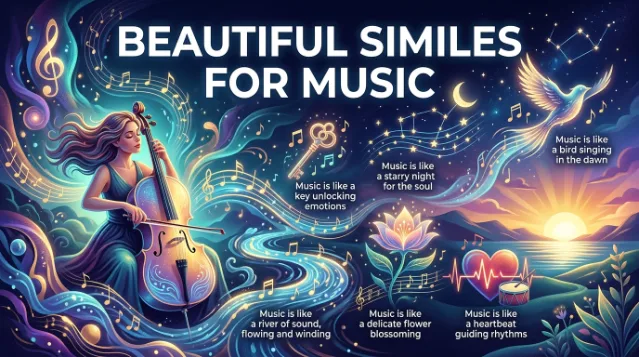
Music has a unique way of expressing emotions that words alone often cannot. Whether you are writing a story, poem, speech, song, essay, or social media caption, using beautiful similes for music can make your writing more vivid and memorable.
This collection explores original and creative ways to compare music with nature, emotions, light, dreams, and everyday experiences. You will also learn what music similes are, why they matter, how to choose the right one, and how to use them naturally without sounding forced. By the end, you’ll have hundreds of fresh ideas to make your writing sing.
What Are Beautiful Similes for Music?
Beautiful similes for music are comparisons that describe music by using words such as “like” or “as.” Instead of saying music is beautiful, you compare it to something familiar that helps readers imagine its sound or emotional effect.
For example:
- Music flowed like a gentle river.
- Her voice was as soft as morning mist.
- The melody sparkled like stars across the night sky.
These comparisons create stronger mental images and help readers connect emotionally with your writing.
Here’s why they work.
A good simile transforms an ordinary description into one that readers can almost hear, feel, or see.
Why These Similes Matter
Using beautiful similes for music improves writing in several ways.
- They make descriptions more colorful.
- They create stronger emotional connections.
- They help readers imagine sounds more clearly.
- They improve storytelling.
- They make poems and lyrics feel richer.
- They keep essays and creative writing more engaging.
- They add personality without using complicated vocabulary.
Now consider this.
Instead of writing:
The piano sounded beautiful.
You could write:
The piano drifted through the room like golden sunlight spilling across a quiet lake.
The second sentence paints a much clearer picture.
How to Choose the Right Simile
The best simile depends on the feeling you want readers to experience.
| If the music feels… | Choose similes about… | Example |
| Peaceful | Nature, water, clouds | Like a calm river |
| Emotional | Tears, memories, hearts | Like forgotten letters |
| Powerful | Thunder, oceans, mountains | Like crashing waves |
| Joyful | Sunshine, birds, laughter | Like children laughing |
| Romantic | Roses, moonlight, candles | Like dancing candlelight |
| Sad | Rain, fading leaves, lonely roads | Like autumn rain |
| Magical | Stars, dreams, fairy lights | Like enchanted stardust |
| Inspirational | Sunrise, wings, open skies | Like an eagle soaring |
Choose comparisons that match both the mood and the audience.
Best Beautiful Similes for Music
Peaceful Music Similes
- Music floated like feathers on a quiet breeze, creating calm.
- Music drifted like morning fog across a meadow, slow and gentle.
- Music flowed like a peaceful river, never rushing.
- Music shimmered like sunlight on still water, bright but relaxing.
- Music rested like fresh snow on pine trees, soft and silent.
- Music echoed like birds greeting dawn, cheerful and natural.
- Music moved like gentle ocean tides, steady and comforting.
- Music glowed like candlelight in a quiet room, warm and welcoming.
- Music settled like autumn leaves on calm ground, graceful and slow.
- Music lingered like lavender in spring air, delicate and pleasant.
- Music wrapped around everyone like a cozy blanket, comforting.
- Music spread like ripples across a quiet pond, peaceful.
- Music breathed like the wind through tall grass, gentle.
- Music danced like floating butterflies, light and graceful.
- Music drifted like soft clouds across blue skies, effortless.
Emotional Music Similes
- Music touched the heart like an old photograph, bringing memories.
- Music lingered like a heartfelt goodbye, impossible to forget.
- Music fell like silent tears, gentle and sincere.
- Music comforted like a warm embrace, easing sadness.
- Music echoed like forgotten promises, emotional and deep.
- Music unfolded like pages from a treasured diary, personal.
- Music glowed like hope after a storm, uplifting.
- Music reached the soul like a handwritten letter, meaningful.
- Music settled like cherished memories, lasting.
- Music trembled like a nervous heartbeat, full of emotion.
- Music bloomed like forgiveness after pain, healing.
- Music rose like renewed courage, inspiring.
- Music lingered like a mother’s comforting words, reassuring.
- Music shined like kindness in difficult times, uplifting.
- Music returned like an old friend, familiar and comforting.
Poetic Music Similes
- Music shimmered like moonlight on crystal water.
- Music bloomed like roses after spring rain.
- Music floated like silver mist beneath the stars.
- Music sparkled like diamonds scattered across velvet skies.
- Music glowed like fireflies at dusk.
- Music drifted like cherry blossoms in the wind.
- Music unfolded like petals greeting sunrise.
- Music flowed like liquid gold.
- Music twinkled like constellations awakening.
- Music danced like shimmering northern lights.
- Music curled like incense through ancient halls.
- Music whispered like enchanted forests at twilight.
- Music sparkled like dew on fresh roses.
- Music rose like phoenix wings, graceful.
- Music glimmered like pearls beneath clear water.
Powerful Music Similes
- Music crashed like towering ocean waves.
- Music roared like thunder rolling across mountains.
- Music struck like lightning, fast and unforgettable.
- Music surged like a mighty waterfall.
- Music echoed like drums across a valley.
- Music stood like an ancient oak, strong and steady.
- Music burned like a blazing bonfire, full of energy.
- Music rose like an erupting volcano, unstoppable.
- Music charged like wild horses, fearless.
- Music exploded like fireworks across the night sky, exciting.
- Music rolled like an avalanche, overwhelming.
- Music echoed like giant cathedral bells, commanding attention.
- Music moved like unstoppable tides, powerful.
- Music soared like an eagle in open skies, bold.
- Music carried listeners like strong winds lifting sails, energizing.
Joyful Music Similes
- Music bubbled like children laughing together.
- Music bounced like puppies chasing butterflies.
- Music sparkled like birthday candles.
- Music glowed like summer sunshine.
- Music danced like colorful balloons in the breeze.
- Music skipped like pebbles across water.
- Music twirled like carnival lights, bright and exciting.
- Music burst like blooming flowers, cheerful.
- Music shined like smiling faces, welcoming.
- Music fluttered like hummingbirds, lively.
- Music jumped like popcorn popping, energetic.
- Music drifted like bubbles floating upward, playful.
- Music laughed like happy friends reunited, joyful.
- Music bounced like tennis balls on fresh courts, rhythmic.
- Music glimmered like rainbow reflections after rain, colorful.
Romantic Music Similes
- Music wrapped around us like a warm embrace.
- Music glowed like candlelight during dinner.
- Music drifted like perfume through a garden.
- Music bloomed like fresh roses in spring.
- Music lingered like a first kiss, unforgettable.
- Music shimmered like moonlight on a quiet lake.
- Music flowed like handwritten love letters, heartfelt.
- Music floated like silk ribbons in the wind.
- Music sparkled like engagement diamonds, brilliant.
- Music melted like chocolate on the tongue, smooth.
- Music rested like hands held together, comforting.
- Music blossomed like romance in springtime, hopeful.
- Music curled like smoke from scented candles, intimate.
- Music glowed like stars above two lovers, peaceful.
- Music drifted like whispered promises, gentle.
Creative Music Similes
- Music stitched moments together like invisible thread.
- Music painted silence like an artist filling a blank canvas.
- Music unlocked memories like an old key opening forgotten doors.
- Music wandered like curious travelers exploring hidden streets.
- Music glowed like lanterns during a festival.
- Music stretched like colorful ribbons across the sky.
- Music scattered joy like flower petals at a celebration.
- Music curled like steam rising from fresh coffee.
- Music bounced like marbles across polished floors.
- Music shimmered like fresh paint drying in sunlight.
- Music climbed like ivy on old stone walls.
- Music unfolded like treasure maps, full of discovery.
- Music bloomed like watercolor spreading across paper.
- Music drifted like floating paper lanterns, peaceful.
- Music sparkled like tiny mirrors catching sunlight, bright.
How to Use These Similes Naturally
The best similes sound effortless. They should fit naturally into your sentence instead of interrupting it.
Here are practical examples.
Story
The violin sang like birds welcoming sunrise, filling the empty church with warmth.
Poem
Her voice drifted like moonlight across sleeping hills.
Essay
The orchestra grew louder like waves building before reaching the shore, creating suspense.
Speech
Great music spreads like kindness, touching everyone it reaches.
Song Lyrics
Your melody stayed like stars that refuse to fade before dawn.
Avoid stacking several similes in one sentence. One strong comparison usually creates the greatest impact.
Common Mistakes to Avoid
Many writers accidentally weaken their smiles.
Here are some common problems.
Using clichés
Examples like “sweet as honey” or “soft as silk” appear so often that they lose their impact.
Mixing emotions
A cheerful song should not suddenly be compared to dark storms unless the contrast is intentional.
Adding too many comparisons
One vivid simile is usually stronger than three average ones.
Choosing unrelated images
Make sure the comparison actually matches the sound or feeling of the music.
Overwriting
Simple comparisons often sound more elegant than extremely complicated ones.
Tips for Writing Better Similes
Creating original beautiful similes for music becomes much easier with practice.
- Listen closely before writing.
- Think about the emotion first.
- Borrow images from nature.
- Use everyday experiences.
- Compare music to movement.
- Compare music to seasons.
- Compare music to light.
- Compare music to weather.
- Keep the comparison easy to imagine.
- Read your sentence aloud to hear its rhythm.
- Replace common clichés with fresh ideas.
- Match the simile to your audience.
- Focus on one strong image instead of many weak ones.
- Use sensory details whenever possible.
- Revise until the comparison feels natural.
Similes by Writing Situation
Different writing situations call for different styles of similes.
| Writing Situation | Best Type of Simile | Example |
| Poetry | Dreamy and poetic | Like moonlight on quiet water |
| Short Stories | Emotional | Like forgotten letters |
| Romance | Warm and gentle | Like candlelight in winter |
| Children’s Books | Fun and playful | Like bouncing bubbles |
| Speeches | Inspirational | Like sunrise after darkness |
| Song Lyrics | Emotional and romantic | Like whispered promises |
| Fantasy Writing | Magical | Like enchanted stardust |
| Historical Fiction | Elegant | Like cathedral bells echoing |
| School Essays | Clear and simple | Like a peaceful river |
| Social Media Captions | Modern and catchy | Like sunshine in stereo |
Final Thoughts
The best beautiful similes for music do more than decorate your writing, they help readers hear emotions, picture scenes, and connect with your message on a deeper level. Whether you are describing a quiet piano melody, an energetic concert, or a heartfelt song, the right comparison can transform a simple sentence into one that stays in someone’s memory. Instead of relying on overused expressions, experiment with fresh images inspired by nature, everyday life, and personal experiences. A thoughtful simile should always support the mood of your writing while making every description feel more vivid, meaningful, and authentic.
As you continue writing, build your own collection of original music similes by paying attention to sounds, emotions, and the world around you. Notice how different melodies remind you of changing seasons, flowing water, bright skies, or treasured memories, then turn those observations into creative comparisons. Practice using one strong simile at a time so it blends naturally into your sentences without overwhelming the reader. Over time, you’ll develop a unique writing style that captures the beauty of music with confidence, creativity, and clarity, making every story, poem, or speech more engaging and unforgettable.
Frequently Asked Questions
What makes a music simile effective?
An effective music simile creates a clear picture while matching the mood of the music being described. It should feel natural rather than forced. For example, saying, “The melody floated like feathers on a gentle breeze,” helps readers imagine softness and peace without using complicated language.
Can I use music similes in academic writing?
Yes, if the assignment allows creative language. Music similes can make essays more engaging when used sparingly. For example, in a literature analysis, you might write, “The background music rose like the morning sun,” to explain how it gradually built emotion without distracting from your main point.
How can I avoid overused music similes?
Start by observing real experiences instead of copying familiar comparisons. Think about places, weather, memories, or objects that remind you of a particular sound. Instead of writing, “Music was as sweet as honey,” compare it to something more original, such as “like rain tapping softly on a greenhouse roof.”
Are music similes useful in songwriting?
Absolutely. Songwriters often use similes to create memorable lyrics and emotional depth. A line like, “Your voice shines like the first light after a storm,” paints a stronger image than simply calling a voice beautiful. Fresh comparisons also help songs stand out from common lyrical patterns.
Should every paragraph include a simile?
No. Too many similes can make writing feel crowded and repetitive. Use them where they add the greatest impact, such as introducing an important scene or emphasizing a powerful emotion. A few carefully chosen comparisons are usually much stronger than filling every paragraph with figurative language.
What’s the difference between a simile and a metaphor?
A simile compares two things using words such as “like” or “as,” while a metaphor states that one thing is another. For example, “The music flowed like a river” is a simile, whereas “The music was a river” is a metaphor. Both create vivid imagery but work differently.
Can children use music similes in school assignments?
Yes. Music similes are excellent for helping young writers make their stories and poems more descriptive. Simple comparisons like, “The song bounced like a happy puppy,” are easy to understand while encouraging creativity and stronger descriptive writing skills.
How do I match a simile to the mood of the music?
Think about the feeling the music creates before choosing your comparison. Peaceful music pairs well with calm images like lakes or clouds, while energetic music fits comparisons involving fireworks, rushing rivers, or galloping horses. Matching emotion and imagery makes the description feel believable.
Can music similes improve public speaking?
Yes. A well-placed simile can make speeches more memorable and relatable. For example, describing a community choir by saying, “Their voices blended like colors in a sunset,” gives listeners a vivid image that is easier to remember than a plain description.
How can I create my own original music similes?
Begin by asking yourself what the music reminds you of in everyday life. Think about movement, colors, weather, seasons, or emotions. Write several possible comparisons, then choose the one that best matches the sound and feeling. Reading your sentence aloud also helps ensure the simile flows naturally.

Daniel Carter is a passionate English writer dedicated to making language learning simple, practical, and engaging. At Grammar Alpha, he shares clear and reliable insights on grammar, vocabulary, word meanings, sentence structure, and everyday English usage. His easy-to-follow articles help students, professionals, and language learners strengthen their writing and communication skills. With a strong focus on clarity and accuracy, Daniel turns complex English concepts into useful lessons, empowering readers to write with confidence, speak naturally, and use English effectively every day.