
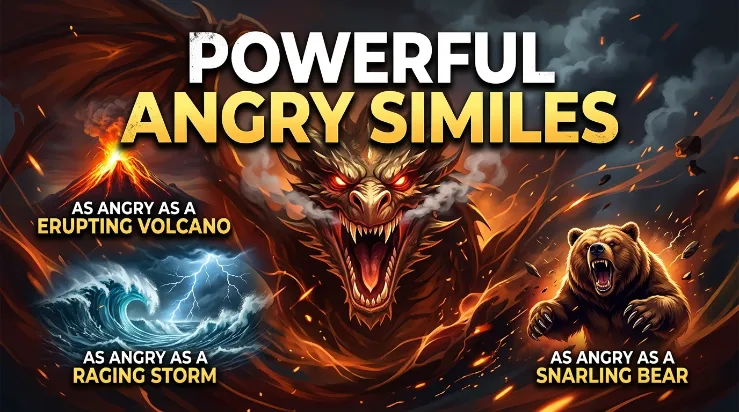
Anger is one of the strongest emotions people experience, but describing it in a fresh and memorable way can be challenging. That’s where powerful angry similes become useful. A well-crafted simile paints a vivid picture, helping readers instantly understand the intensity, cause, or style of someone’s anger.
In this guide, you’ll discover hundreds of original powerful angry similes, grouped into easy-to-browse categories. You’ll also learn what makes an effective simile, how to choose the right one for different situations, common mistakes to avoid, and practical tips for writing stronger comparisons. Whether you’re writing fiction, poetry, essays, speeches, or everyday conversations, you’ll find plenty of inspiration here.
What Are Powerful Angry Similes?
Powerful angry similes compare anger to something else using words such as “like” or “as.” Instead of simply saying someone is angry, a simile creates a mental image that makes the emotion feel stronger and more believable.
For example:
- As fierce as a thunderstorm.
- Like a volcano ready to erupt.
- As sharp as broken glass.
Each comparison gives readers a different feeling. Some emphasize explosive rage, while others highlight quiet frustration, controlled anger, or simmering resentment.
The best similes are:
- Easy to understand
- Fresh and original
- Relevant to the situation
- Emotionally vivid
- Natural sounding
Now let’s see why they matter.
Why These Similes Matter
Strong similes transform ordinary writing into memorable writing.
Instead of writing:
“She looked angry.”
You could write:
“She looked like a storm cloud moments before lightning struck.“
The second sentence immediately creates tension.
Powerful angry similes also help:
- Create stronger emotions
- Improve storytelling
- Make dialogue more realistic
- Add personality to descriptions
- Keep readers engaged
- Improve creative writing skills
- Avoid repetitive wording
Whether your audience is reading a novel, blog post, speech, or classroom assignment, vivid comparisons make your writing easier to remember.
How to Choose the Right Simile
Not every angry simile fits every situation.
Some describe explosive rage, while others suggest silent irritation or controlled fury.
Here’s a simple guide.
| Situation | Best Type of Simile | Example |
| Mild irritation | Calm but tense | Like a kettle beginning to whistle |
| Quiet anger | Controlled | As still as frozen lava |
| Sudden rage | Explosive | Like a volcano bursting open |
| Revenge | Cold anger | As patient as winter ice |
| Funny story | Humorous | Like a cat denied its favorite chair |
| Drama | Intense | Like wildfire racing uphill |
| Poetry | Emotional | As dark as a moonless storm |
| Children’s writing | Gentle | Like a grumpy bear waking too early |
Choose a comparison that matches both the strength and tone of the emotion.
Best Powerful Angry Similes
Explosive Angry Similes
- Like a volcano tearing open, anger that cannot stay hidden.
- As fierce as a wildfire in dry grass, spreading rapidly.
- Like thunder breaking overhead, sudden and overwhelming.
- As violent as crashing waves, impossible to ignore.
- Like a cannon finally firing, delayed but devastating.
- As hot as fresh lava, burning with rage.
- Like fireworks exploding all at once, loud and chaotic.
- As unstoppable as an avalanche, crushing everything ahead.
- Like a dam bursting apart, emotions flooding outward.
- As dangerous as a lightning strike, quick and shocking.
- Like a rocket leaving the ground, instantly explosive.
- As intense as a furnace at full heat, impossible to cool quickly.
- Like boiling oil spilling over, sudden and painful.
- As loud as an earthquake splitting stone, impossible to ignore.
- Like a pressure cooker exploding, built-up tension released.
Quiet Angry Similes
- As silent as frozen lava, calm on the surface.
- Like ice hiding deep cracks, secretly dangerous.
- As cold as winter steel, emotionally distant.
- Like smoke drifting before flames, warning of trouble.
- As still as deep water before a storm, deceptively calm.
- Like a tightly locked vault, emotions hidden away.
- As steady as a ticking clock, patiently waiting.
- Like a shadow following every step, persistent anger.
- As hard as polished stone, impossible to soften.
- Like an unspoken threat, heavy with meaning.
- As calm as a sleeping lion, peaceful for now.
- Like snow covering sharp rocks, danger beneath the surface.
- As quiet as midnight fog, hiding emotion.
- Like an arrow waiting on the string, ready.
- As controlled as a master swordsman, disciplined but dangerous.
Creative Angry Similes
- Like ink spreading across clean paper, anger reaching everything.
- As tangled as thorny vines, difficult to escape.
- Like shattered mirrors reflecting pain, broken emotions.
- As heavy as iron chains, weighing someone down.
- Like smoke trapped in a bottle, pressure building.
- As twisted as old tree roots, deeply connected.
- Like broken gears grinding together, constant frustration.
- As bright as molten metal, impossible to ignore.
- Like cracked earth begging for rain, worn thin.
- As sharp as shattered crystal, cutting with every word.
- Like storm winds trapped indoors, restless.
- As restless as caged lightning, full of energy.
- Like paint thrown across a wall, messy emotion.
- As unpredictable as shifting sand, constantly changing.
- Like splintered wood beneath pressure, ready to break.
Funny Angry Similes
- As grumpy as a rooster before sunrise, annoyed from the start.
- Like a squirrel protecting one last nut, overly defensive.
- As irritated as a cat in a bath, obviously unhappy.
- Like burnt popcorn in a microwave, impossible to ignore.
- As cranky as a sleepy toddler, emotional and loud.
- Like toast landing butter-side down, frustrated instantly.
- As annoyed as a bee chasing a lawn mower, endlessly bothered.
- Like someone stuck behind every red light, constant irritation.
- As dramatic as a goose guarding a sidewalk, surprisingly fierce.
- Like a phone battery dying at one percent, bad timing.
- As grouchy as an alarm clock on Monday, universally disliked.
- Like socks disappearing in the dryer, mysteriously upsetting.
- As upset as melted ice cream on a hot day, disappointed.
- Like a dog watching squirrels through a window, powerless frustration.
- As impatient as popcorn waiting to pop, ready to burst.
Poetic Angry Similes
- As dark as clouds swallowing the sunset, overwhelming emotion.
- Like thunder searching for mountains, seeking release.
- As lonely as a storm over the sea, isolated anger.
- Like rain refusing to stop, endless frustration.
- As bitter as frost in spring, unexpected resentment.
- Like black feathers scattered in wind, emotional chaos.
- As fierce as the ocean beneath moonlight, hidden strength.
- Like a river carving stone, persistent anger.
- As endless as winter nights, lingering resentment.
- Like stars hidden behind smoke, emotions concealed.
- As haunting as empty forests, lingering tension.
- Like falling leaves before winter, inevitable change.
- As relentless as ocean tides, impossible to stop.
- Like broken echoes across cliffs, repeating hurt.
- As wild as untamed storms, impossible to control.
Modern Angry Similes
- Like an overloaded computer freezing suddenly, overwhelmed.
- As heated as a phone running too many apps, pushed beyond limits.
- Like endless notifications during a meeting, constant irritation.
- As tense as weak Wi-Fi during a live stream, stressful.
- Like traffic during rush hour, frustratingly slow.
- As explosive as a trending online argument, escalating rapidly.
- Like a battery draining at one percent, losing patience.
- As relentless as spam emails, never ending.
- Like buffering during the best scene, unbelievably annoying.
- As overloaded as an inbox after vacation, mentally exhausted.
- Like glitching software before an update, unstable.
- As crowded as holiday traffic, overwhelming.
- Like headphones tied into impossible knots, frustrating.
- As relentless as breaking news alerts, impossible to ignore.
- Like forgotten passwords on deadline day, incredibly stressful.
How to Use These Similes Naturally
The strongest similes fit naturally into the sentence.
Instead of forcing a comparison, let it support the emotion.
Examples:
- His anger spread like wildfire racing across dry hills.
- She stood as still as frozen lava, refusing to speak.
- The coach shouted like thunder rolling through mountains.
- His frustration grew like steam inside a sealed kettle.
- Their argument exploded like fireworks filling the night sky.
Notice how each simile strengthens the scene without becoming distracting.
You can also mix them into dialogue.
Example:
“You look like a volcano ready to erupt,” Mia whispered.
Or narrative:
Ethan walked away as cold as winter steel, hiding every emotion behind a calm expression.
Common Mistakes to Avoid
Many writers weaken their similes without realizing it.
Here are the biggest mistakes.
Using clichés too often
Readers have seen comparisons like “mad as a hornet” countless times. Fresh ideas are usually more memorable.
Making comparisons too confusing
A simile should create an immediate picture. If readers have to stop and think, simplify it.
Mixing emotions
Don’t compare anger with something joyful unless you’re intentionally creating irony.
Overusing similes
Too many comparisons can overwhelm readers. Use them where they have the greatest impact.
Ignoring the audience
Children, students, business readers, and novel fans all respond differently. Match your language to your audience.
Tips for Writing Better Similes
Creating original powerful angry similes becomes easier with practice.
Try these techniques:
- Observe nature during storms.
- Think about heat, pressure, speed, and force.
- Compare emotions with everyday objects.
- Use sounds, colors, and movement.
- Avoid repeating the same image.
- Read your sentence aloud.
- Keep comparisons short.
- Focus on one strong idea.
- Make every simile fit the scene.
- Revise until it sounds natural.
A simple comparison often works better than an overly complicated one.
Similes by Writing Situation
Different situations call for different styles of similes.
Here’s a helpful comparison.
| Writing Situation | Best Simile Style | Example |
| Fiction | Dramatic | Like a volcano breaking open |
| Poetry | Emotional | As dark as gathering storm clouds |
| Children’s stories | Gentle | Like a grumpy bear before breakfast |
| Speeches | Inspirational | Like fire that must be controlled |
| Personal essays | Reflective | As heavy as iron chains |
| Blogs | Modern | Like endless notifications |
| Humor | Funny | As cranky as a cat in a bathtub |
| Mystery novels | Quiet | As silent as frozen lava |
| Fantasy | Epic | Like a dragon guarding treasure |
| Historical fiction | Powerful | As relentless as marching armies |
Final Thoughts
Finding the best powerful angry similes is not just about making your writing sound more dramatic. It is about helping readers clearly picture emotions that simple words often cannot express. A thoughtful comparison can turn an ordinary sentence into one that feels vivid, emotional, and memorable. Whether you are writing a novel, poem, blog post, speech, or classroom assignment, choosing a simile that matches the intensity and context of the anger will always make your message stronger. Small changes in wording can create a much bigger emotional impact, making your writing more engaging from beginning to end.
The most effective writers keep their similes fresh, natural, and purposeful instead of relying on overused comparisons. Experiment with different images from nature, everyday life, technology, or personal experiences to create descriptions that feel original. Read your sentences aloud to see if they flow smoothly and support the mood of your writing. Over time, you will develop a collection of favorite comparisons that fit different situations. With regular practice and careful word choice, powerful angry similes can become one of your most valuable tools for creating expressive, believable, and unforgettable writing.
Frequently Asked Questions
What makes a simile powerful when describing anger?
A powerful angry simile creates a clear mental image while matching the intensity of the emotion. Instead of using a common comparison, choose one that feels specific to the situation. For example, saying someone was like a dam ready to burst suggests controlled emotion that is close to exploding, making the description more vivid.
Can I use angry similes in formal writing?
Yes, but they should fit the purpose and audience. Creative essays, speeches, and literary analysis often benefit from well-chosen similes. In a business report or academic paper, however, use them sparingly. A comparison should clarify an idea rather than distract readers with unnecessary drama.
How can I create my own original angry similes?
Start by thinking about the qualities of anger, such as heat, pressure, speed, or silence. Then compare those qualities to something familiar. For example, if anger builds slowly, you might write like steam gathering beneath a sealed lid. Original observations often produce the strongest similes.
Are angry similes suitable for children’s writing?
Yes, as long as the comparisons are age-appropriate and easy to understand. Instead of using frightening imagery, compare anger to familiar experiences. For example, as grumpy as a bear missing its nap is simple, playful, and easy for younger readers to imagine without sounding overly intense.
What is the difference between a simile and a metaphor about anger?
A simile compares two things using like or as, while a metaphor states that one thing is another. For example, like a roaring storm is a simile, while his anger was a roaring storm is a metaphor. Both are effective, but similes make the comparison more direct.
How many similes should I include in one piece of writing?
Quality matters more than quantity. A few well-placed similes usually have a stronger effect than using one in every sentence. For instance, a single vivid comparison during a key emotional moment often leaves a greater impression than several repetitive descriptions throughout the same paragraph.
Can funny angry similes still express real emotion?
Absolutely. Humor can soften the mood while still showing frustration. For example, describing someone as like a cat watching a closed door communicates irritation in a lighthearted way. Funny similes work especially well in personal stories, children’s books, and entertaining blog posts.
Why should I avoid overused angry similes?
Overused similes often lose their impact because readers have encountered them many times before. Fresh comparisons capture attention and make your writing stand out. Instead of repeating familiar expressions, create images inspired by everyday experiences, weather, technology, or unique observations that feel new and memorable.
Can angry similes improve dialogue in fiction?
Yes, they can make conversations feel more natural and expressive. A character saying, I’m like a pressure cooker that’s had enough, reveals personality while showing emotion. Well-chosen similes also help distinguish different characters by giving each one a unique way of describing their feelings.
What is the easiest way to practice writing better angry similes?
Practice by observing real situations and describing them with fresh comparisons. Watch storms, crowded traffic, boiling water, or tense sports moments, then connect those images to emotions. Writing five new similes each day is a simple exercise that gradually builds creativity and expands your descriptive vocabulary.

Elliot Mason is a passionate English writer dedicated to making language learning clear, practical, and enjoyable. As an author at Grammar Alpha, he creates helpful content covering grammar, vocabulary, word meanings, sentence structure, common mistakes, and everyday English usage. His straightforward articles are designed for students, professionals, and English learners who want to communicate with greater confidence. Elliot believes that better English begins with understanding the basics, and his goal is to turn challenging language concepts into simple, useful lessons readers can apply every day.